


By Dr. Eyob Tadesse (Hawassa University), Nesibu Yahya & Simon Birhanu (WeForest Ethiopia)
With support from the European Union, L'Université d'Hawassa (HWU), WeForest, local communities, and a broad network of governmental and non-governmental actors co-created Ethiopia’s Agroforestry Living Lab within the AfroGrow project. As part of this milestone, the Living Lab held a Multi-Actor Platform (MAP) workshop on 2 September 2025 in the Sidama region of southern Ethiopia.
The workshop brought together 24 participants representing research institutions, government offices, community leaders, and women’s and youth groups. Its purpose was to provide an overview of the Living Lab, deepen understanding of Ethiopia’s Enset–Coffee-based agroforestry systems, and identify priority plant, crop, and animal species that support local livelihoods and ecosystems.
Bringing Local Knowledge and Science Together
Participants collaborated to validate and enrich Living Lab databases covering 47 plant species, 29 crops, and 13 animal breeds. The process reflected AfroGrow’s commitment to participatory methods, ensuring that local ecological knowledge complemented scientific expertise. This approach follows the Multi-Actor Platform model, promoting inclusive and evidence-based decision-making. A recurring message from participants was clear: “Agroforestry in Sidama is not just a production system — it is a way of life.” The traditional Enset–Coffee system provides food, income, ecological stability, and cultural continuity, making it central to resilience at household and landscape levels.
A Quadruple Helix of Stakeholders
The workshop convened a diverse group of actors, echoing the Quadruple Helix model that engages academia, government, civil society, and the private sector. Women and youth played a particularly active role, offering perspectives on the nutritional and economic value of fruit trees, livestock, and agroforestry by-products.
Identifying Priority Species
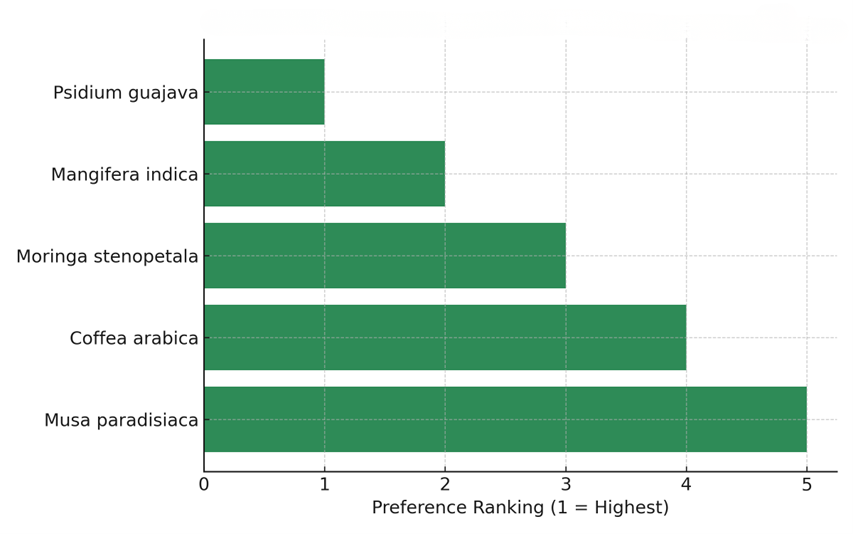
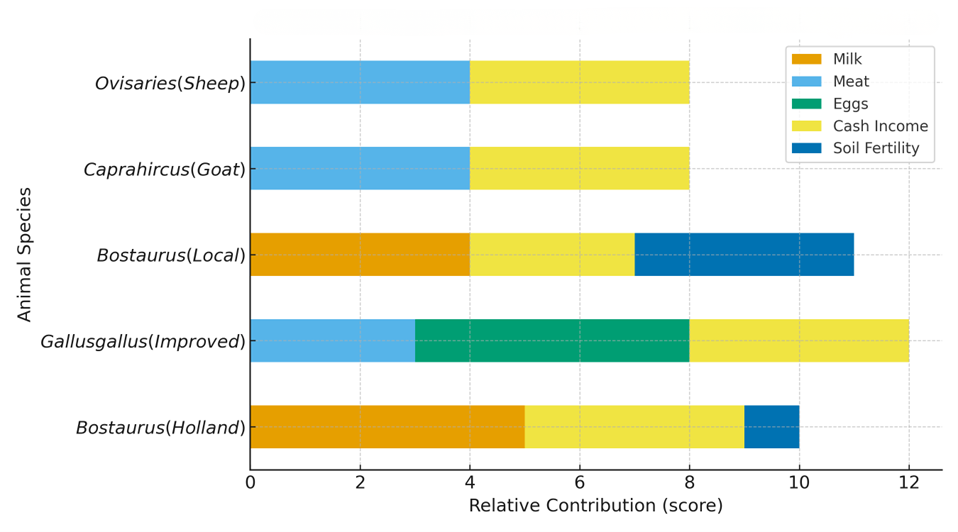
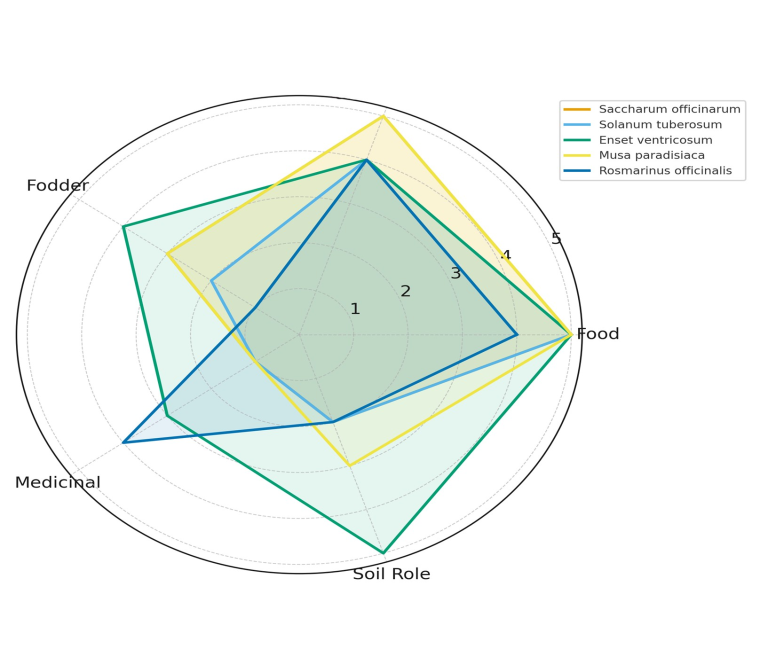
Through participatory ranking exercises, the group identified species most crucial for food security, income, et ecosystem health:
- Top plants included Psidium guajava (Guava), Mangifera indica (Mango), Moringa stenopetala (Moringa), Coffea arabica (Coffee), and Musa paradisiaca (Banana). These species are valued for their multiple uses, such as providing food, shade, bee forage, medicine, and income.
- Principaux crops like Saccharum officinarum (sugarcane), Solanum tuberosum (potato), and Enset ventricosum were recognized for their yield, drought resilience, and contributions to food systems.
- Among animals, Bos taurus (local and improved cattle breeds) et Gallus gallus domesticus (local and improved chicken breeds) were noted for their adaptability and their roles in milk, meat, and egg production.
Exploring Opportunities for Green Entrepreneurship
Beyond species prioritization, participants explored ways to increase household and community income through agroforestry products and by-products. Examples included processing mango, guava, and moringa for juices, herbal preparations, and cosmetics, and reusing coffee residues and banana stems for compost or fiber. Discussions highlighted the importance of processing capacity, market linkages, and access to finance in unlocking these opportunities.
Alignment with National Priorities
The workshop’s findings resonate with Ethiopia’s Green Legacy Initiative and broader national strategies promoting sustainable land use and biodiversity restoration. The outcomes, such as promoting resilient breeds and market-oriented fruit trees, will feed into ongoing policy and practice dialogues. The Ethiopian Living Lab is poised to serve as a national and regional knowledge hub within AfroGrow.
Reflections and Next Steps
Participants praised the workshop’s participatory approach, particularly the breakout discussions and ranking exercises that allowed for open exchange and co-creation of priorities. Some logistical challenges, such as time management between thematic sessions, were noted and will guide improvements for upcoming activities.